Connect
Sign up to receive our monthly newsletter.
Inquiries
Have a question? Contact us here.
Job Opportunities
Learn about job openings.

Digital Public Goods Alliance - 2026
Sign up to receive our monthly newsletter.
Have a question? Contact us here.
Learn about job openings.
Insights, stories, and updates on digital public goods and the open-source ecosystem from the Digital Public Goods Alliance.
September 9, 2026
The Open Data Institute Joins the Digital Public Goods Alliance
The Digital Public Goods Alliance is excited to welcome the Open Data Institute (ODI) as its newest member.As part of their membership, ODI will review its portfolio of tools, frameworks, and standards to identify candidates for nomination to the DPG Registry. This includes the Open Data Maturity Model, Framework for AI ready Data, and Data Ethics Canvas.As a joint steward of the upcoming DPG4AI collection, the ODI will help develop criteria for identifying digital public goods for responsible AI development. They will also create an accompanying AI Readiness Toolkit to help governments, international organisations, and civil society assess their preparedness for responsible AI.Finally, the ODI will engage DPG organisations to explore where Solid, an open standard stewarded by the ODI giving individuals greater control over their data, could strengthen interoperability, data portability, privacy, and user agency across existing DPGs."The ODI joining the Digital Public Goods Alliance is a natural step toward a future built on open, trustworthy foundations that empower everyone, not the few. That is the web I envisaged.” Sir Tim Berners-Lee, co-founder of the ODI and inventor of the World Wide Web."Joining the Digital Public Goods Alliance marks an exciting step for the ODI and for our mission to make data work for everyone. The DPGA brings together a diverse coalition of organisations committed to using digital tools and open standards to tackle the world's most pressing challenges, and we're proud to be part of it. We work globally with governments, businesses and civil society and know firsthand how critical open, trustworthy data infrastructure is to driving sustainable development. Through this membership, we'll bring more than a decade’s worth of expertise in data governance, open standards, and responsible AI, helping to build an ecosystem that truly serves the people who need it most." Louise Burke, CEO of the ODI“Open data is essential to advancing digital public goods, especially at a moment when public interest AI development depends on access to open, trustworthy, and interoperable data. The Open Data Institute brings longstanding expertise in open standards, data governance, and responsible AI, making them a valuable addition to the Digital Public Goods Alliance. Their membership comes at a critical moment, as the DPG ecosystem works to ensure that the data foundations shaping AI are aligned with the public interest.” Liv Marte Nordhaug, CEO of the DPGA SecretariatTogether, the DPGA and the Open Data Institute will continue exploring opportunities to advance digital public goods and artificial intelligence. By fostering greater collaboration and expanding access to trusted open solutions, this partnership will help countries accelerate AI adaptation and mitigation efforts while ensuring that digital transformation delivers benefits for all.To learn more about both memberships in the DPGA, read the ODI announcement.You can also explore their planned Roadmap activities through the ODI membership profile.
March 9, 2023
New Report Exploring Data as and in Service of the Public Good
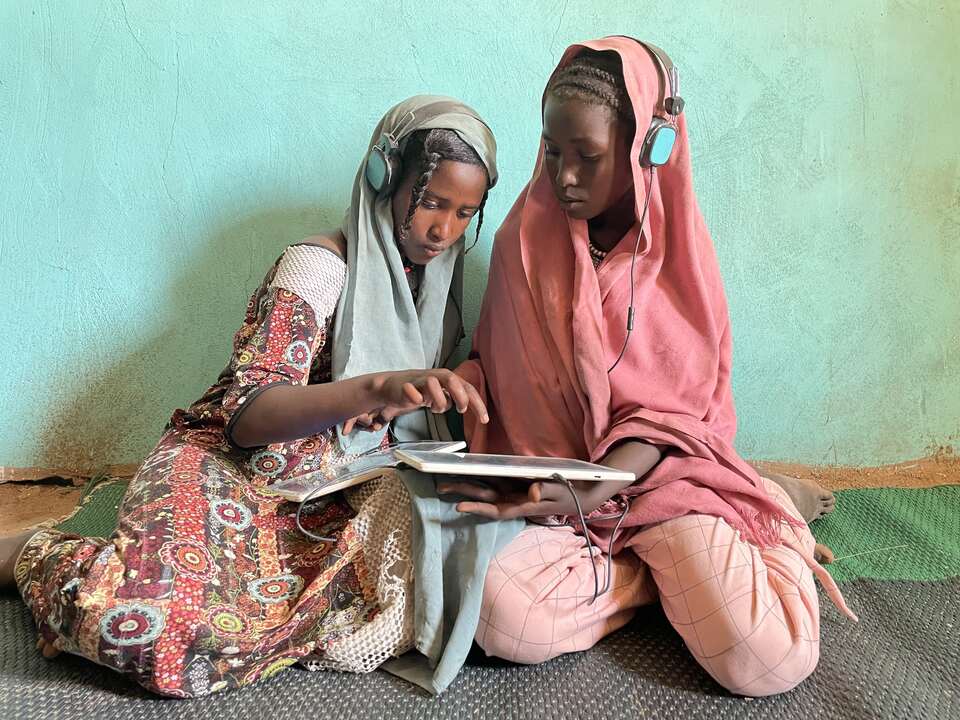
Data is becoming a key driver of economic vitality with demonstrated potential to serve the public good. It can play a key role in the fulfillment of human rights, including child rights, and attainme...
February 15, 2023
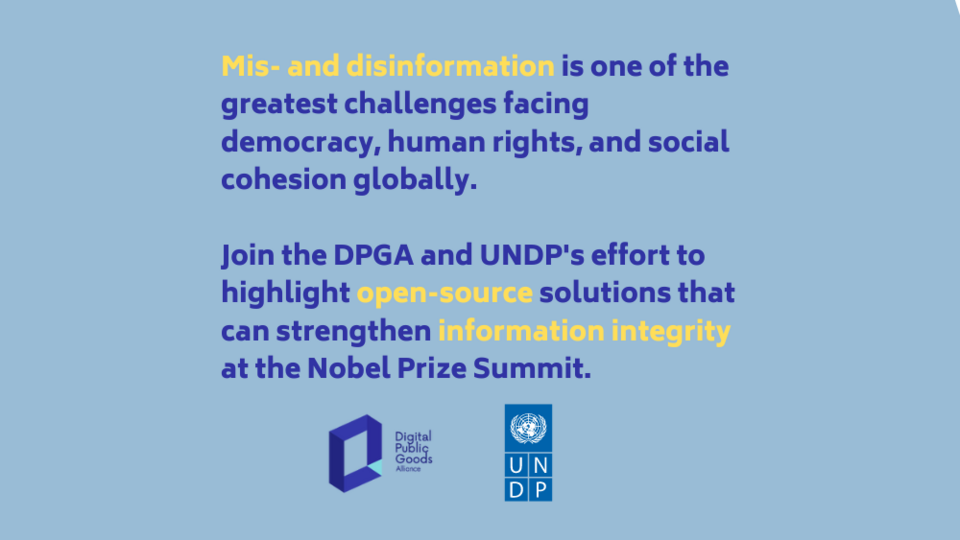
Addressing the information pollution crisis with the power of open source
The Digital Public Goods Alliance and the United Nations Development Programme are collaborating to discover and promote open-source solutions and concepts that can help tackle the urgent global chall...

January 16, 2023
G20: a unique opportunity to advance digital public infrastructure
OECD Development Matters As we enter 2023, there is no shortage of global challenges, crises, and wars that will test the robustness of our digital foundations. To start the year, DPGA Co-Lead Liv Mar...

January 10, 2023
The DPG Charter: Key takeaways on norms and principles for safe and inclusive digital public infrastructure
This blog first appeared on the Digital Impact Alliance (DIAL) website and is written by: Nicholas Gates (DIAL), Chrissy Martin Meier (DPG Charter), Lucy Harris (DPGA), and Moira Whelan (National Demo...

December 14, 2022
State of the Digital Public Goods Ecosystem 2022 Report
In 2022 countries increasingly recognised and implemented digital public goods as part of their digital transformations. Alongside this growth, the DPGA has seen an increase in the frequency, nuance, ...
December 7, 2022
Call for Submissions of Open Agricultural Advisory Services
The Digital Public Goods Alliance’s Food Security Community of Practice, co-chaired by the Norwegian Agency for Development Cooperation (Norad) and the Food and Agriculture Organization of the UN (FAO...

November 28, 2022
UN Office of Information and Communications Technology joins the DPGA
Today, the United Nations Office of Information and Communication Technology (OICT) became the latest member of the DPGA. OICT works with digital public goods through their Open Source Software for Su...

November 17, 2022
DPGA launches new nominations portal making it easier for open-source solutions to become digital public goods!
The DPGA believes in the potential of open-source as a catalyst for accelerating the attainment of Sustainable Development Goals. Countless tools exist that can be part of the solutions that policymak...

November 8, 2022
The DPG Charter: Key takeaways on deploying digital public goods as infrastructure
This blog first appeared on the Digital Impact Alliance (DIAL) website and is written by: Nicholas Gates (DIAL), Chrissy Martin Meier (DPG Charter), Lucy Harris (DPGA), and Viraj Tyagi (eGov Foundatio...
October 20, 2022
The DPG Charter: Key takeaways on building policymaker capacity to adopt and govern digital public infrastructure
This blog first appeared on the Digital Impact Alliance (DIAL) website and is written by: Nicholas Gates (DIAL), Chrissy Martin Meier (DPG Charter), Lucy Harris (DPGA), and Jean-Philbert Nsengimana (A...
October 6, 2022
The DPG Charter: Key takeaways on supporting digital public goods for the long-term
This blog first appeared on the Digital Impact Alliance (DIAL) website and is written by: Nicholas Gates (DIAL), Chrissy Martin Meier (DPG Charter), Lucy Harris (DPGA), and Paula Hunter (Mojaloop Foun...

September 27, 2022
Global leaders usher in a new era of digital cooperation for a more sustainable, equitable world
Right to left, Mr. Bill Gates, Co-Chair, The Bill & Melinda Gates Foundation; His Excellency Alar Karis, President, Republic of Estonia; His Excellency, Julius Maada Bio, President, Republic of Sierra...

September 18, 2022
Digital Public Infrastructure for An Inclusive Future
At the upcoming 77th Session of the UN General Assembly, world leaders alongside members of the private sector and civil society will convene on 21 September for a side-event titled: ‘The Future of Di...