Connect
Sign up to receive our monthly newsletter.
Inquiries
Have a question? Contact us here.
Job Opportunities
Learn about job openings.

Digital Public Goods Alliance - 2026
Sign up to receive our monthly newsletter.
Have a question? Contact us here.
Learn about job openings.
Insights, stories, and updates on digital public goods and the open-source ecosystem from the Digital Public Goods Alliance.
September 22, 2026
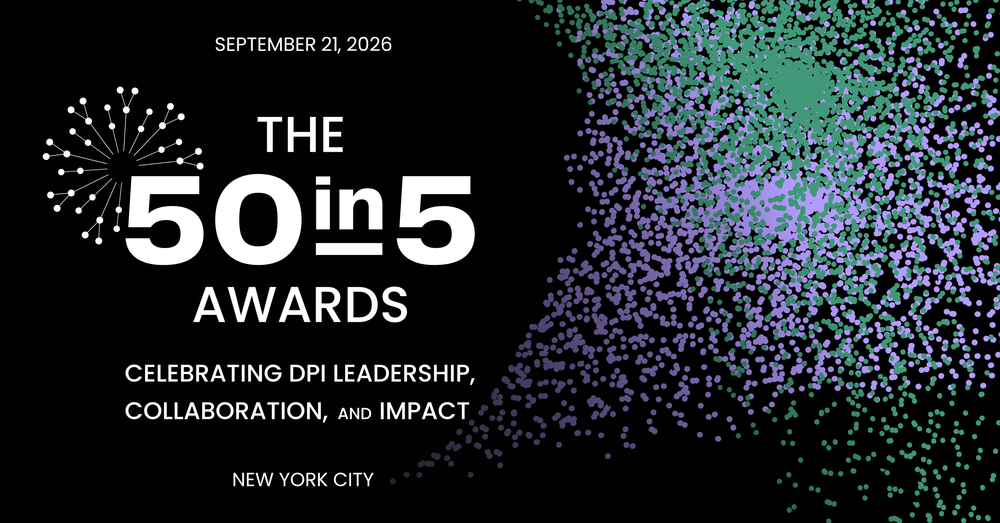
Celebrating Global DPI Milestones: Highlights from the 50-in-5 Awards
Implementing safe, inclusive, and interoperable digital public infrastructure expands access to essential services, fosters strong economies, and delivers impact. By collaborating to share lessons and open technologies rather than going it alone, countries can radically shorten implementation journeys, avoid duplicative costs, and maximise progress.To celebrate these achievements, the 50-in-5 campaign hosted the inaugural 50-in-5 Awards during the 81st UN General Assembly week at The Morgan Library & Museum. Organised by the Digital Public Goods Alliance and Co-Develop, the 50-in-5 Awards recognise the countries and individuals turning digital public infrastructure into real-world progress and sustained human impact.Across the Impact, Collaboration, and Leadership categories, the 50-in-5 Awards highlight practical approaches, from foundational digital IDs reaching entire populations to regional payment networks for small businesses, that other countries can adapt to their own contexts.Read the full announcement to discover the category winners and runners-up honored at the 50-in-5 Awards ceremony, as well as the 40th country to officially join the campaign.
February 19, 2025
2024 State of the DPG Ecosystem Report is now live!
2024 was a year filled with numerous highlights for the digital public goods Ecosystem, underscoring the vital and positive impact that DPGs can facilitate across all of the Sustainable Development Go...

January 30, 2025
Digital Commons and Digital Public Goods – Finding Common Ground for Policy-makers
Authors: Liv Marte Nordhaug – Digital Public Goods Alliance Secretariat CEO & NGI Commons DCTF Member, Nicholas Gates – Open Forum Europe, NGI Commons This article is co-written by the Digital Public ...

December 18, 2024
Exploring the Potential of Digital Public Goods to Spur Climate Resilience
Author: Jameson Voisin, Director of Programs and Communications, Digital Public Goods Alliance Secretariat Digital public goods (DPGs) are playing a pivotal role in tackling some of the world’s most p...
December 17, 2024
Building momentum for Digital Public Goods – Sharing the DPGA Advocacy Strategy
Author: Jon Lloyd, Director of 50-in-5 and Advocacy, Digital Public Goods Alliance Secretariat Digital public goods (DPGs) are transforming how the world is tackling some of our most pressing global c...
December 12, 2024
How digital public goods can help unlock the public interest potential of AI
Author: Liv Marte Nordhaug, Secretariat CEO, Digital Public Goods Alliance Over the course of the last few months, culminating with in-depth workshops at the recent 2024 Digital Public Goods Alliance ...

November 26, 2024
Highlights from the DPGA Annual Members Meeting in Singapore
Author: Lucy Harris, COO and Interim Director of Membership, DPGA Secretariat Earlier this month, the Digital Public Goods Alliance hosted its 2024 Annual Members Meeting (AMM) in Singapore, bringing ...
November 14, 2024
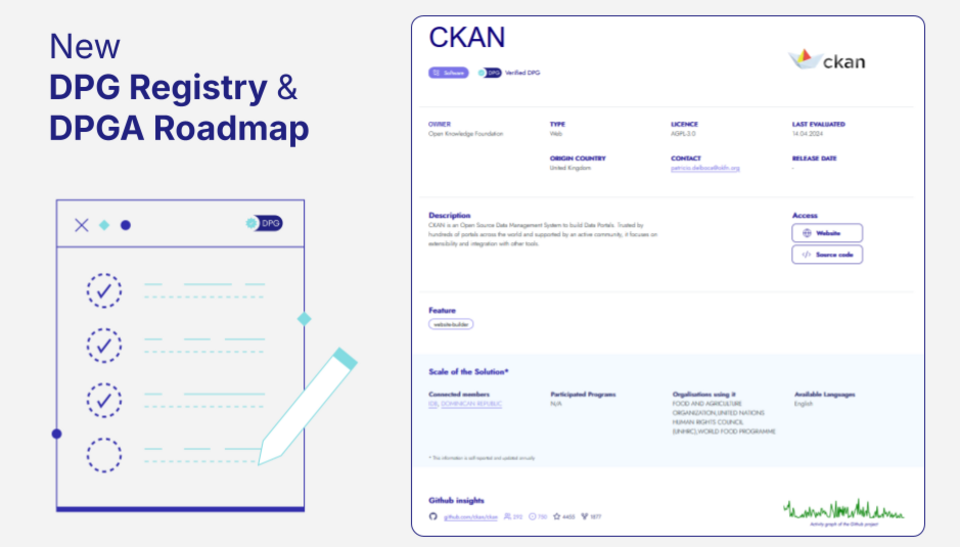
Transforming the way we learn about DPGs. Introducing the new DPG Registry, Roadmap, Product and Member Profiles!
Author: Pelin Hizal Smines, Product & Experiences Lead As part of the DPGA Secretariat’s efforts to ensure digital public goods (DPGs) are accessible, transparent, and discoverable, we embarked on a p...
November 13, 2024
The DPGA Annual Members Meeting Kicks Off in Singapore by Welcoming Three New Members!
Each year, the DPGA Annual Members Meeting brings together members to strengthen the collective ability to discover, develop, use, and invest in digital public goods. This year’s event, co-hosted by D...
November 6, 2024
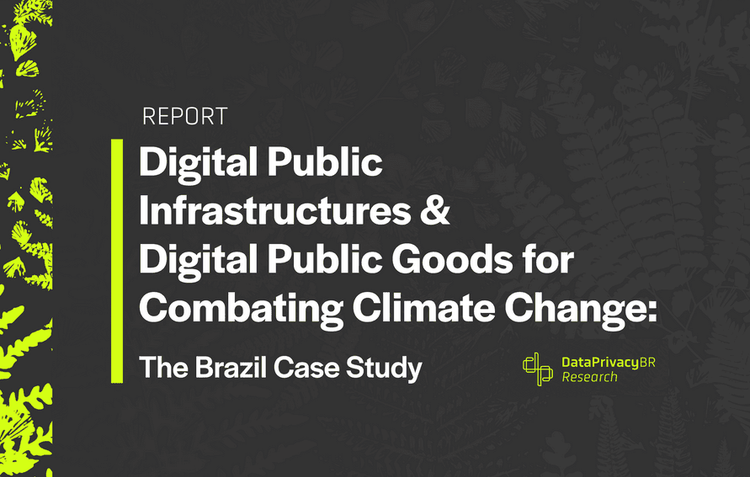
New Report Highlights Role of Digital Public Goods for Climate Action
Data Privacy Brasil has released a new report examining the role digital public goods (DPGs) and digital public infrastructure (DPI) could play in addressing and adapting to climate change. This repor...
October 29, 2024
An Invitation to Contribute to Digital Public Goods During Hacktoberfest
Author: Bolaji Ayodeji, DPG Evangelist and Technical Coordinator It’s October, and something happens in the developer community at this time of the year: Hacktoberfest—a month-long celebration of open...

October 29, 2024
The Role of Open Data in AI systems as Digital Public Goods
Author: Liv Marte Nordhaug, Secretariat CEO, Digital Public Goods Alliance Over the last few years, there has been a surge in interest and adoption of generative artificial intelligence systems, and a...

October 3, 2024
Democratizing AI systems as DPGs: Insights from T20 policy brief co-authored by the DPGA
Author: Lea Gimpel, Director of AI and Country Engagement (Visiting Fellow) Against the backdrop of the G20 DEWG Ministerial Declaration’s emphasis on the role of open-source in AI development and the...
September 24, 2024
Press Release: 50-in-5 Milestone Event Illustrates How to Implement the New Global Digital Compact Safely and Inclusively
Press ReleaseNew York City, September 23, 2024 — Today, the 50-in-5 campaign, an initiative that seeks to help 50 countries design, launch, and scale components of their digital public infrastructure ...
August 23, 2024
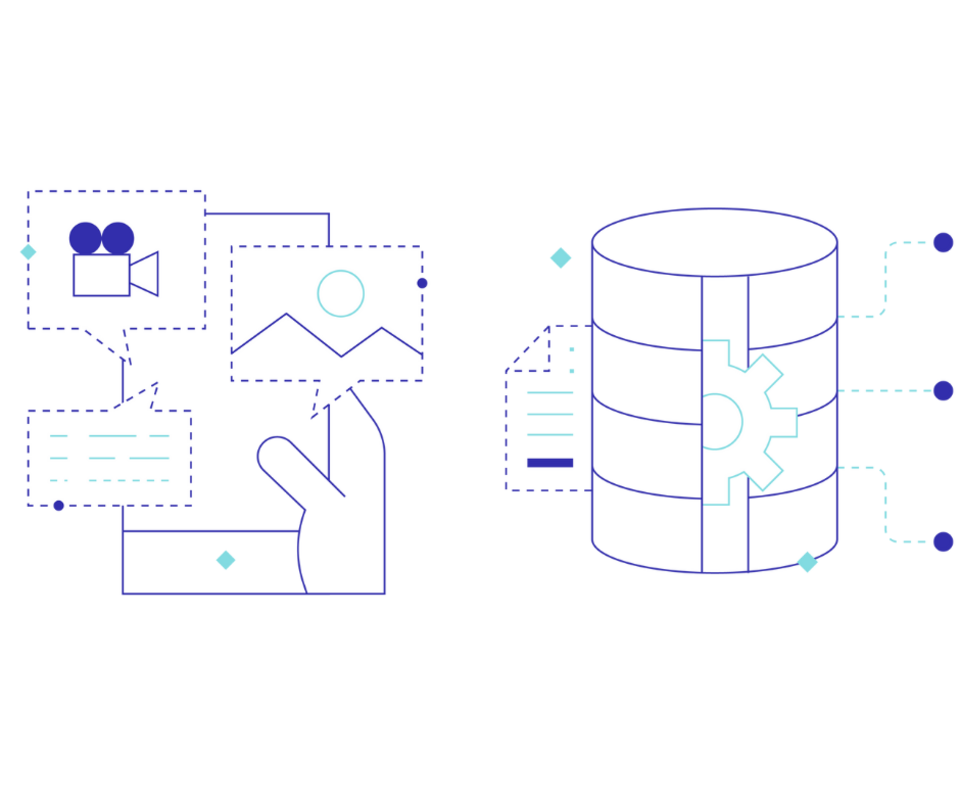
Enhancing the Openness and Usability of Digital Public Goods by Accepting Only Fully Open-Licensed Content Collections and Data Sets
Author: Amreen Taneja, Standards Lead, DPGA Secretariat The Digital Public Goods Alliance (DPGA) is committed to maintaining the highest standards of openness and usability of digital public goods (DP...